Best practices, processes, incident response, Disaster Recovery, and more, are the foundations of service availability
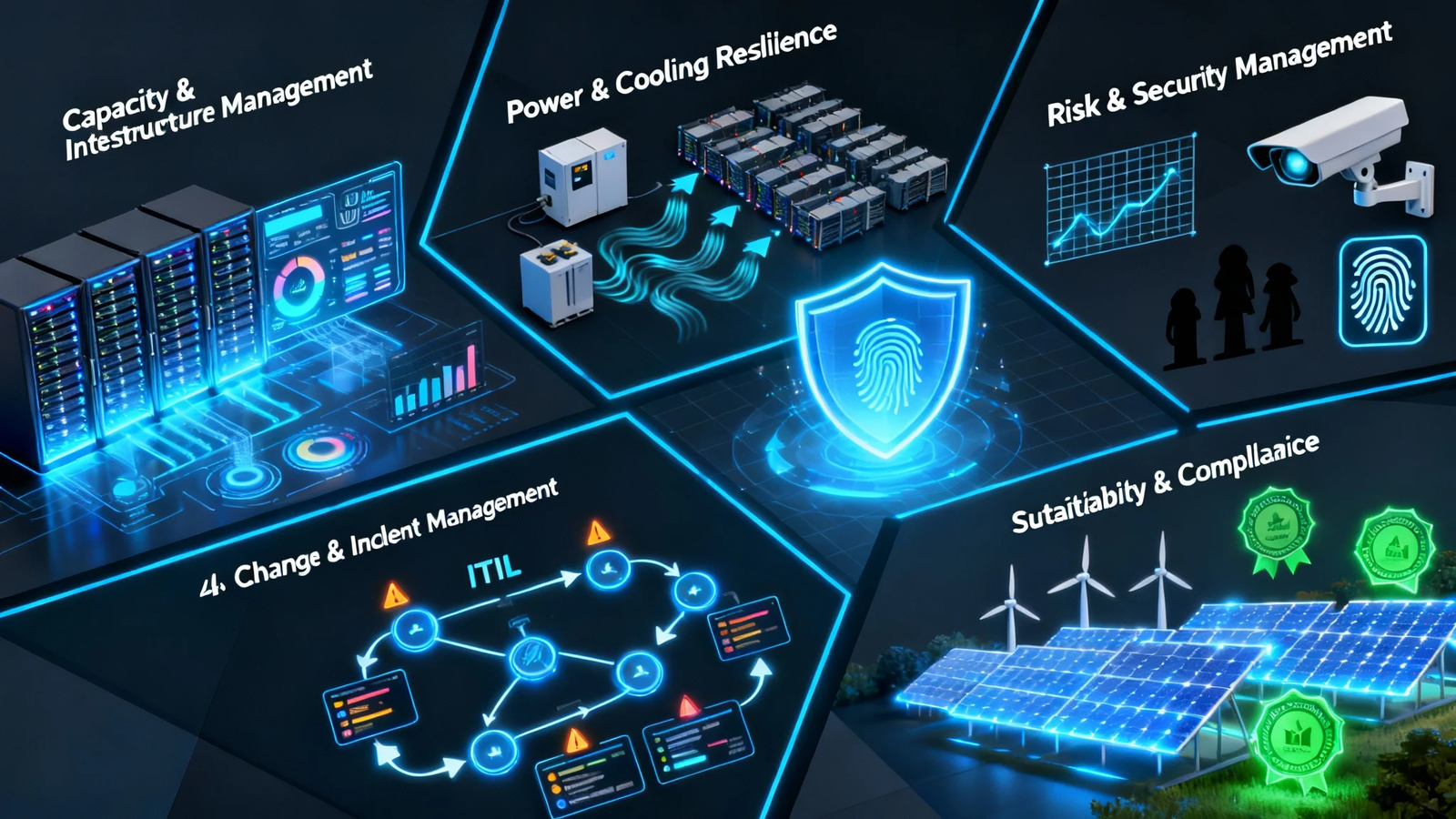
Use DCIM tools to monitor power, cooling, space, and connectivity in real time. Regular audits help optimize efficiency, avoid over-provisioning, and maintain balanced capacity.
Design redundancy following TIA-942 and Uptime Institute Tier standards. Preventive maintenance and advanced cooling strategies like hot/cold aisle containment ensure uptime.
Adopt multi-layered physical and cyber security aligned with ISO 27001. Regular incident testing, access reviews, and penetration tests strengthen resilience.
Implement ITIL-based workflows for structured change control and risk mitigation. Frequent drills, playbook reviews, and root cause analysis enhance operational reliability.
Incorporate BREEAM/LEED standards and integrate renewable energy where feasible. Continuous compliance with energy, data protection, and environmental regulations future-proofs operations.